
POS Hardware for Software Companies: From Standalone Terminals to Connected Ecosystems
POS hardware is no longer limited to a single checkout terminal.
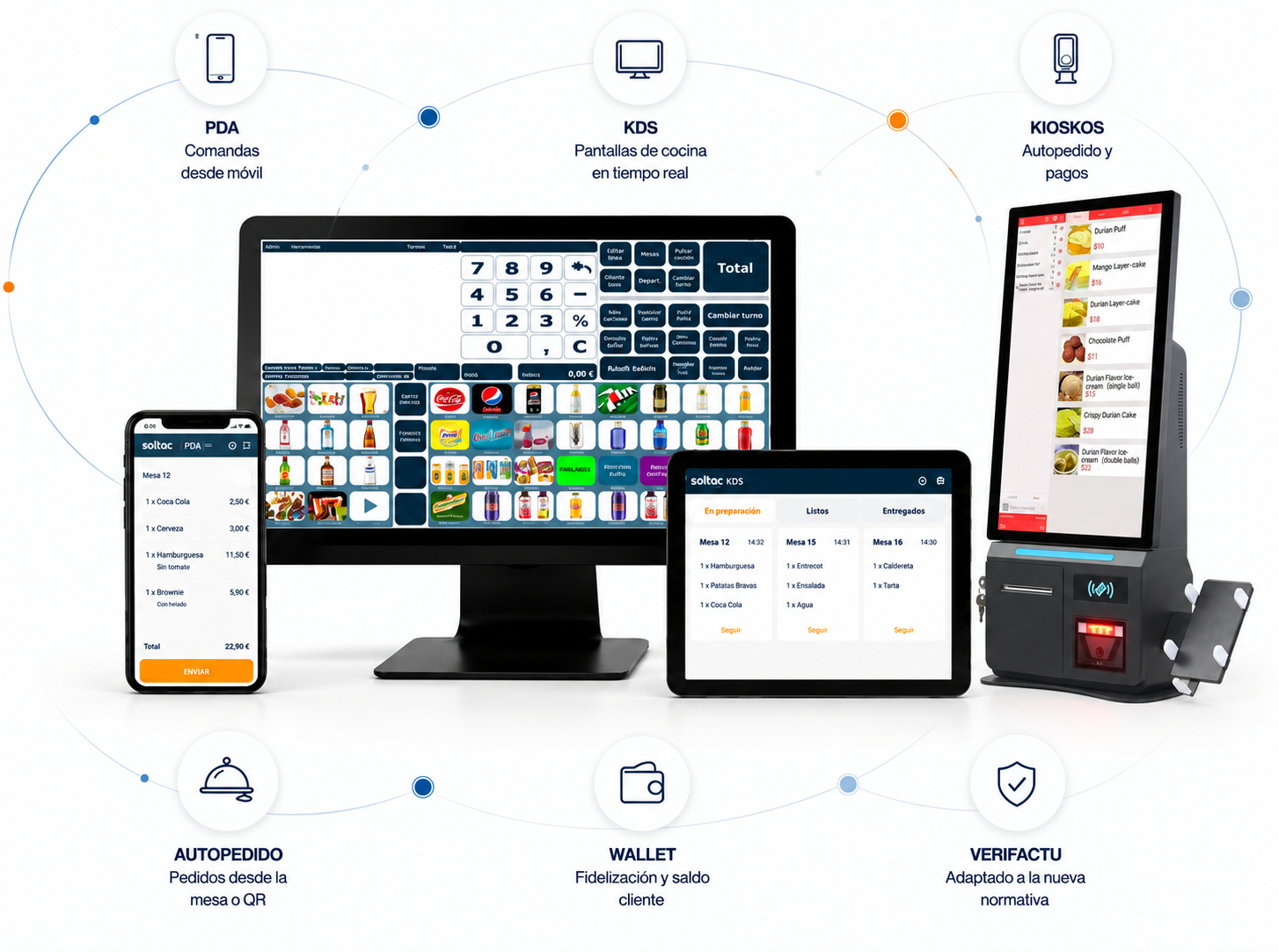
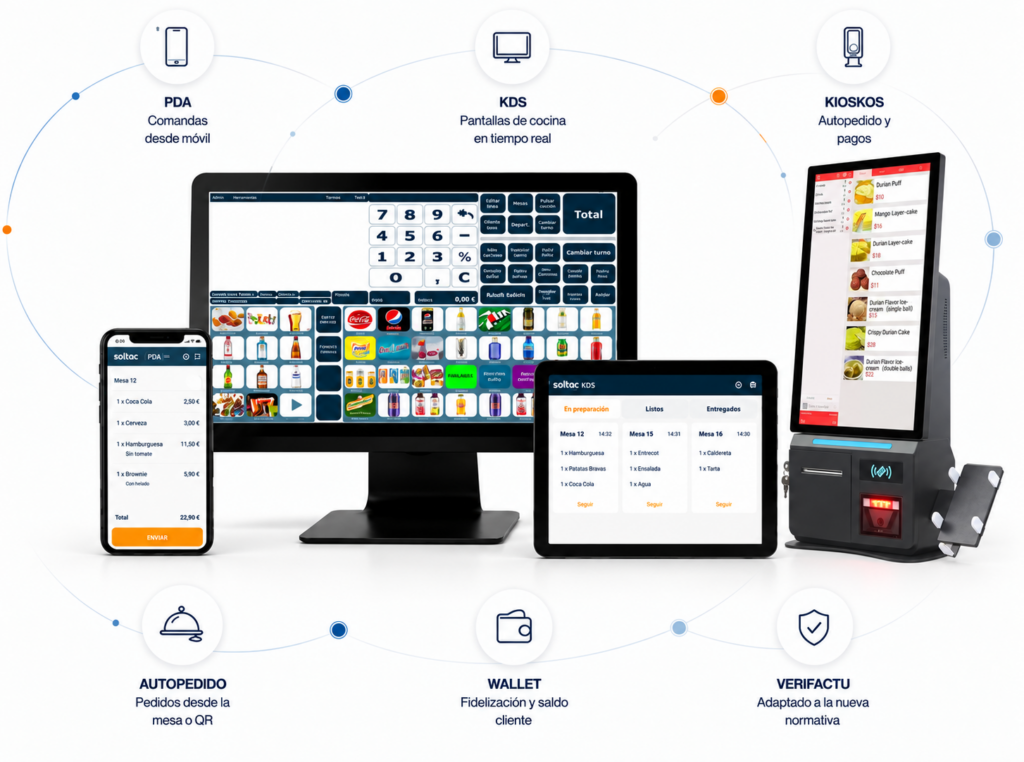
Today, POS software companies may need cashier terminals, self-service kiosks, handheld devices, KDS screens, printers, scanners, and customer displays to work within one connected system.
As a result, POS software companies face a new hardware challenge.
Different devices must work together within one software environment. At the same time, the hardware must remain reliable, scalable, and cost-effective.
Therefore, hardware selection is no longer only about choosing one POS terminal. It is increasingly about building a connected hardware ecosystem.
For software developers and system integrators, this makes the choice of OEM/ODM hardware partner more important than before.
1. POS Hardware Is Becoming Part of a Larger Commercial Ecosystem
Traditional POS installations were relatively simple.
For example, a store might use one cashier terminal connected to a receipt printer, barcode scanner, and cash drawer.
Today, however, many retail and hospitality businesses use several connected devices.
A restaurant may use a countertop POS terminal for payment. In addition, it may use a self-ordering kiosk for customer orders.
Waiters may also use handheld terminals for table service. Meanwhile, kitchen staff may rely on a Kitchen Display System, or KDS, to manage food preparation.
Retail stores are following a similar path.
They may combine conventional POS terminals with customer displays, mobile computers, self-checkout stations, and inventory devices.
Although these devices perform different tasks, they often need to work with the same software platform.
Therefore, software companies must look beyond the specifications of one terminal.
Instead, they need to consider compatibility across the entire hardware environment.
2. Why POS Software Companies Are Rethinking Their Hardware Strategies
One useful industry example comes from NCR Voyix, which began transitioning its POS and self-checkout hardware business to an outsourced ODM model with Ennoconn in 2026.
In 2026, NCR Voyix began transitioning its point-of-sale and self-checkout hardware business to an outsourced ODM model with Ennoconn.
Under this model, Ennoconn handles key hardware responsibilities. These include design, manufacturing, warranty, supply, and shipment.
Meanwhile, NCR Voyix continues to focus on software and related services.
This example does not mean every POS software company will follow the same model.
However, it does highlight an important industry direction.
Software-focused companies do not always need to build or manage their own hardware manufacturing operations.
Instead, they can work with specialized OEM/ODM manufacturers.
As a result, regional POS software developers can expand their hardware portfolios more efficiently.
The same applies to restaurant technology companies, retail software providers, and system integrators.
However, the right manufacturing partner must offer more than low pricing.
It should also support different products, configurations, and integration requirements.
3. What Should Software Companies Look for in a POS Hardware OEM Partner?
Choosing an OEM partner requires careful evaluation.
Of course, processor, memory, storage, and price still matter.
However, several other factors are equally important.
Hardware Compatibility Across Multiple Devices
First, software companies should check whether the manufacturer can support different hardware categories.
For example, an integrated hospitality solution may require:
- Windows or Android POS terminals
- Single-screen and dual-screen POS systems
- Self-ordering kiosks
- Kitchen Display Systems
- Handheld POS terminals or Android PDAs
- Receipt printers
- Barcode scanners
- Customer-facing displays
Using one manufacturer for several device categories can simplify sourcing.
In addition, it can make hardware coordination easier.
However, product compatibility should never be assumed.
Instead, software installation and peripheral testing should be completed before larger deployments.
Application performance should also be verified under real operating conditions.
Flexible OEM and ODM Customization
Different applications require different hardware configurations.
For example, a restaurant POS application may need fast touch response and stable Ethernet connectivity.
It may also require multiple USB ports and reliable operation during long business hours.
A self-service kiosk has different requirements.
It may need an integrated printer, QR code scanner, NFC reader, payment terminal bracket, and customized enclosure.
Meanwhile, a retail inventory project may require a rugged PDA with a dedicated barcode scanning engine.
Therefore, the hardware partner should understand the actual application.
It should also be able to discuss the right display size, processor, memory, and interface options.
In addition, the manufacturer should support suitable peripherals and mounting structures.
Branding and enclosure customization may also be important for OEM projects.
Reliable Software and Peripheral Integration
Hardware specifications alone do not guarantee a successful deployment.
Therefore, software companies should confirm integration requirements before placing volume orders.
Important areas include:
- Windows, Android, or Linux compatibility
- USB, Ethernet, serial, and other required interfaces
- Receipt printer communication
- Barcode scanner communication
- Touchscreen response
- Application performance
- SDK and driver availability
- Kiosk Mode requirements
- Device management requirements
- Operating system updates
- Long-term platform maintenance
For Android projects, additional factors may also matter.
For example, some customers require Google Mobile Services.
Others need OTA updates, remote device management, app control, or Kiosk Mode.
Therefore, these requirements should be confirmed early.
Early testing can reduce integration problems later.
More importantly, it can prevent expensive changes after mass production starts.
4. The Importance of Modular Self-Service Hardware
Self-service kiosks are also becoming more diverse. Not every project needs a large floor-standing kiosk.
For example, a compact touchscreen terminal may work well for price checking.
It may also be suitable for membership registration, visitor check-in, queue management, or information services.
Larger self-ordering and self-checkout applications have different needs.
They may require bigger screens and more integrated peripherals.
For example, they may include an embedded thermal printer, payment device, scanner, camera, or NFC reader.
Therefore, a modular product structure gives system integrators more flexibility.
It allows them to select only the functions required for each project.
At the same time, it helps control product cost and installation space.
Mounting options are also important.
For instance, some projects require desktop installation. Others need wall mounting or floor-standing structures.
As a result, a flexible hardware platform can support more application scenarios without redesigning the entire product.
5. Long-Term Hardware Support Matters
A hardware partnership does not end after the first shipment.
Commercial POS and kiosk devices may remain in service for many years.
Therefore, long-term product support is important.
Before placing volume orders, software companies should discuss several points with their hardware supplier:
- Product lifecycle
- Hardware platform availability
- Spare-parts arrangements
- Warranty conditions
- Technical support
- Operating system maintenance
- Driver maintenance
- Production batch consistency
- Alternative component approval procedures
Component supply can also change over time.
For example, motherboard availability, memory pricing, or display panel supply may change during a product lifecycle.
Therefore, both sides should agree on how alternative components will be tested and approved.
This is especially important for software companies.
A hardware change may affect application stability, peripheral drivers, or operating system compatibility.
As a result, long-term communication with the OEM partner becomes essential.
6. Why Device Management Is Becoming More Important
Android POS and kiosk projects are also changing.
In the past, many buyers mainly compared CPU, RAM, storage, and Android version.
Today, however, enterprise customers often ask additional questions.
For example:
- Can devices receive OTA updates?
- Can applications be installed remotely?
- Can Kiosk Mode be enabled?
- Can devices restart automatically after an error?
- Can administrators check device health remotely?
- Can logs be collected for troubleshooting?
These questions become more important as deployment size increases.
Managing five terminals is relatively simple.
Managing 500 or 5,000 devices is very different.
Therefore, device lifecycle management is becoming an important part of commercial Android hardware.
For OEM manufacturers, this does not always mean building a complete MDM platform.
Instead, the hardware should provide reliable OS support, stable APIs, and compatibility with third-party management solutions.
For larger Android deployments, companies can also evaluate Android Enterprise device management and third-party EMM solutions.
7. Building Hardware Around the Software Application
Software companies should avoid choosing hardware only because it has the highest specifications.
Instead, the configuration should match the real application.
For example, a standard restaurant POS application may run well on a mainstream processor with 8GB RAM.
Therefore, using a much more expensive processor may not improve the customer experience.
On the other hand, a computer-vision self-checkout project may require more processing power.
It may also need multiple cameras, USB 3.x, high-speed Ethernet, or NPU capability.
As a result, hardware selection should be based on the software workload and deployment scenario.
This approach helps reduce unnecessary cost.
At the same time, it gives customers enough performance for long-term operation.
8. How SOMANPOS Supports Software and System Integration Partners
SOMAN TECHNOLOGY CO., LTD. focuses on OEM/ODM manufacturing for POS hardware and commercial computing devices.
We work with software companies, system integrators, distributors, importers, and technology solution providers.
Our product portfolio includes:
- Windows POS terminals
- Android POS terminals
- All-in-one POS systems
- Dual-screen POS terminals
- Self-service kiosks
- Kitchen Display Systems
- Commercial touchscreen monitors
- Android PDAs
- Rugged handheld terminals
- Barcode scanners
- Receipt printers
- Customer displays
- Cash drawers and POS peripherals
However, our goal is not simply to supply individual devices.
Instead, we work with partners to identify suitable hardware for their software and project requirements.
For example, a partner may need one Windows POS terminal for cashier use.
The same project may also require Android handheld devices, self-ordering kiosks, KDS screens, and receipt printers.
In this case, we can discuss the complete hardware structure together.
Depending on the product and order quantity, OEM/ODM options may include:
- Hardware configuration
- Operating system configuration
- Peripheral integration
- Logo customization
- Enclosure customization
- Display customization
- Mounting solutions
- Packaging customization
In addition, sample testing can be arranged before mass production.
This gives software partners time to test performance and compatibility.
As a result, potential issues can be identified earlier in the project.
9. From One POS Terminal to a Connected Hardware Platform
Retail and hospitality technology will continue to become more connected.
Therefore, software companies need to think beyond one POS terminal.
They need to consider how cashier stations, kiosks, handheld devices, KDS screens, printers, scanners, and customer displays work together.
At the same time, they need to manage compatibility, cost, lifecycle, and technical support.
This is where the right OEM/ODM partnership becomes valuable.
A capable hardware manufacturer can support different device categories while keeping configurations consistent.
In addition, it can help software companies adapt hardware for different customers and markets.
As a result, software providers can focus more resources on their applications, services, and customer relationships.
Meanwhile, the hardware partner can focus on manufacturing, integration, customization, and supply.
Conclusion: Choose a Hardware Partner, Not Just a POS Terminal
The POS market is becoming more connected.
Therefore, hardware selection should no longer be treated as a one-product decision.
Software companies should look for a partner that understands hardware compatibility, integration, customization, and long-term support.
A flexible OEM/ODM manufacturing partner can help build a stronger foundation for future POS, kiosk, and retail technology projects.
If you are developing restaurant POS software, retail management software, self-service applications, or commercial touchscreen solutions, SOMANPOS can help you evaluate suitable hardware options.
You can discuss your software requirements, operating system, screen size, interfaces, peripherals, customization needs, and expected order quantity with our team.
Looking for a POS hardware OEM/ODM partner?
Contact SOMANPOS to discuss your next project.
Email: info@soman-tech.com


